

Does your baby want to look around?
That’s completely normal. But you don’t need to turn your baby outward-facing to let them see what is happening: when facing the wearer, they can look to the side, and when ready, back carrying gives them an even wider view.
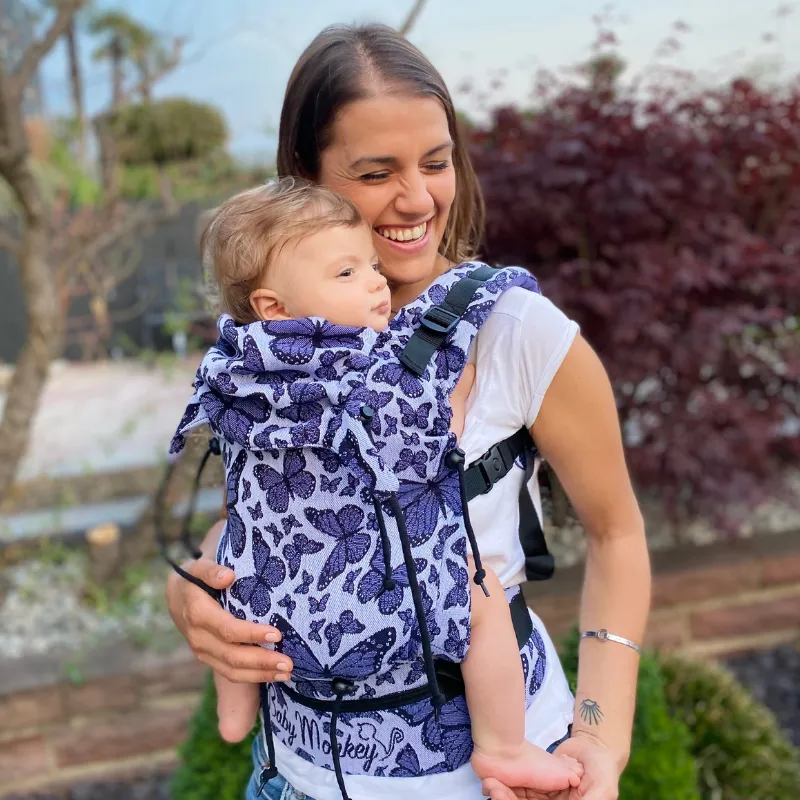
See the world while staying close
Your baby can turn their head and look around while staying close to and supported by the wearer.
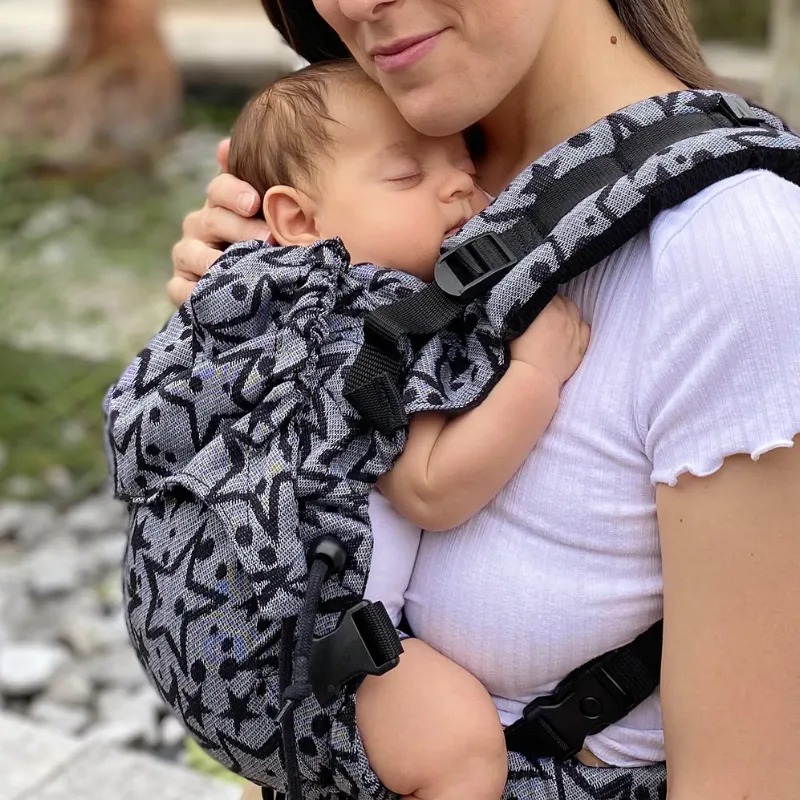
Can settle in and rest
When tired, your baby can turn back toward the wearer, rest against them and more easily reduce stimulation from the surroundings.
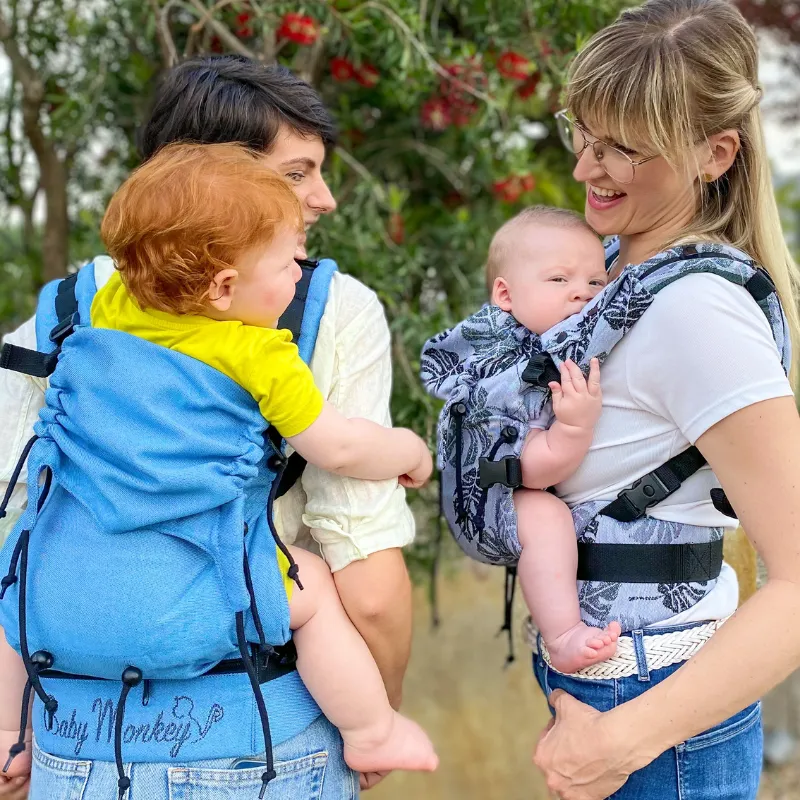
A wider view as they grow
Once your baby has good head and trunk control, back carrying is the position our carriers offer for a wider view.
Why BabyMonkey does not offer outward-facing carrying
For us, it is not a missing feature: it is a position we have deliberately chosen not to include.
We design our carriers around positions that keep the baby close to the wearer, provide more continuous support for the pelvis and thighs, and allow the baby to rest and settle in when needed. Keeping the weight close to the body also helps the wearer manage the load more comfortably.
Four reasons we prefer facing the wearer
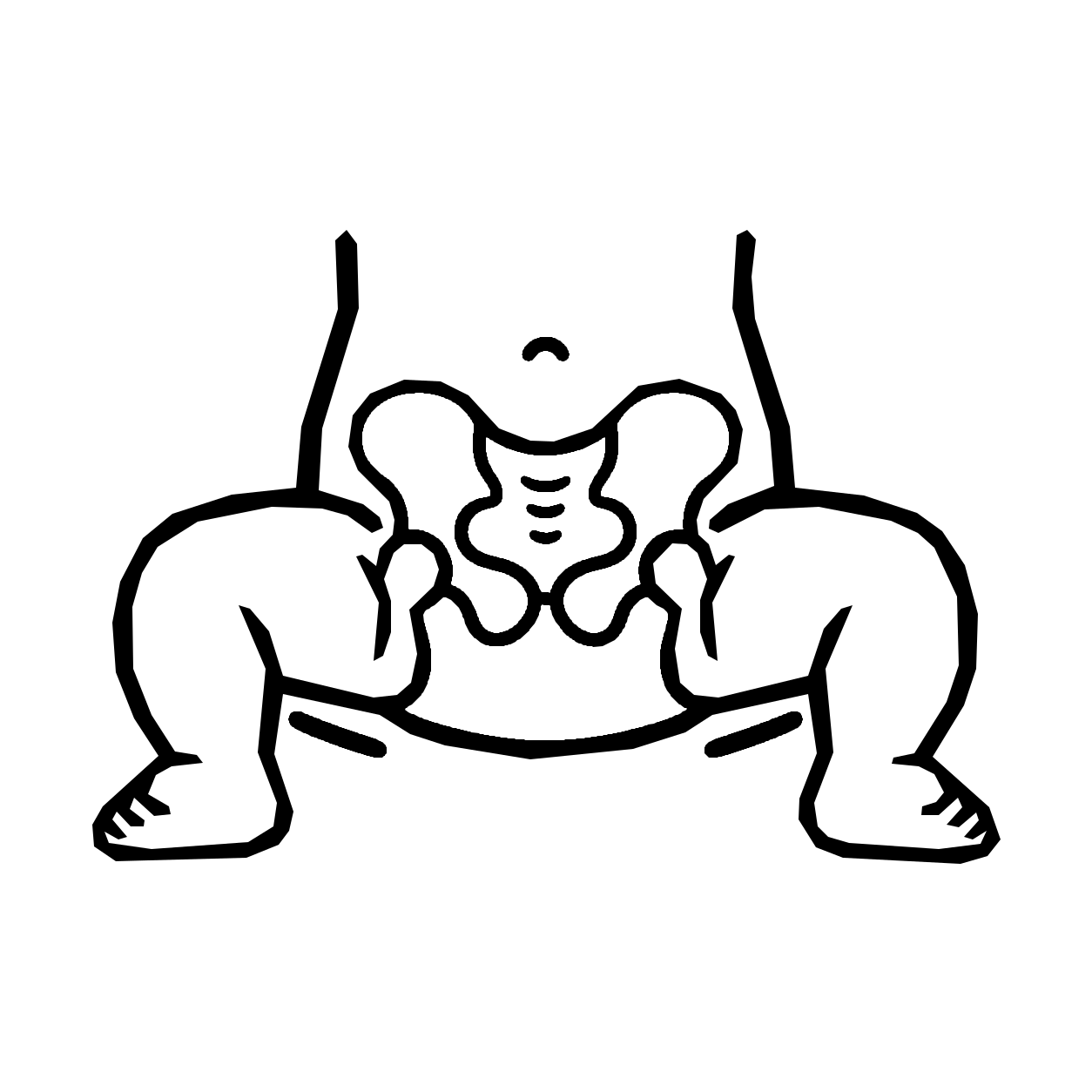
Supported pelvis and thighs
It is easier to keep the baby in a tucked, supported position, with the thighs well supported and the body close to the wearer.
More comfort for the wearer
With the weight close to the body, the centre of gravity remains more favourable. In an outward-facing position, the weight tends to project further forward.
The wearer helps filter stimulation
The baby can look around and, whenever needed, immediately turn back toward the wearer’s face and body instead of remaining constantly exposed outward.
Can rest and lean in
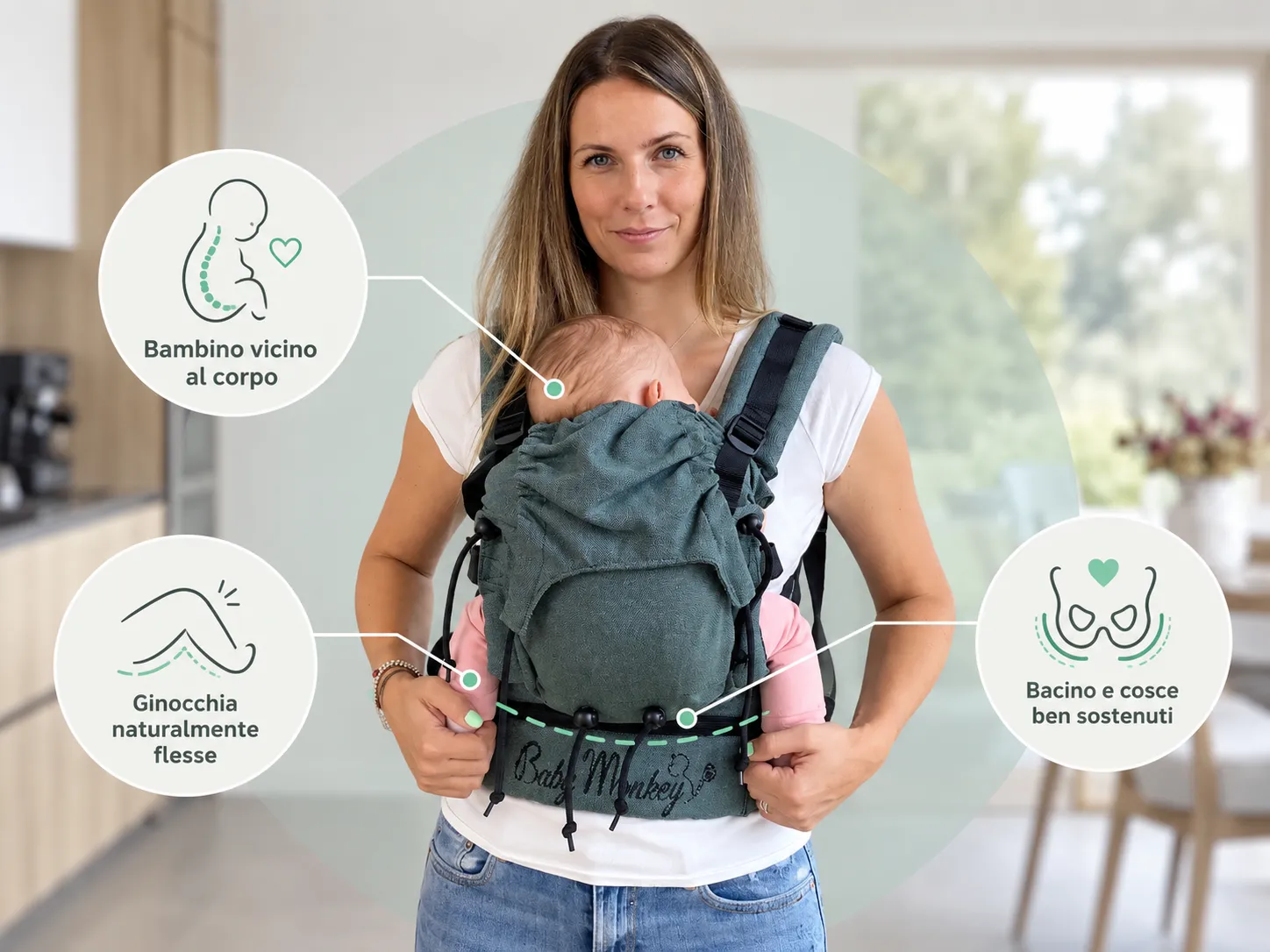
When tired or needing to settle, the wearer’s body remains an immediate place to rest against.
It’s not only about where your baby is looking
When choosing a baby carrier, what matters most is how the body is supported. When facing the wearer, the baby can stay close, with the thighs and pelvis supported and the option to rest against the wearer’s body.
These are the criteria we used to design Regolo and Agilo—not the number of positions we could add to the product.
Facing the wearer vs outward-facing: the difference at a glance
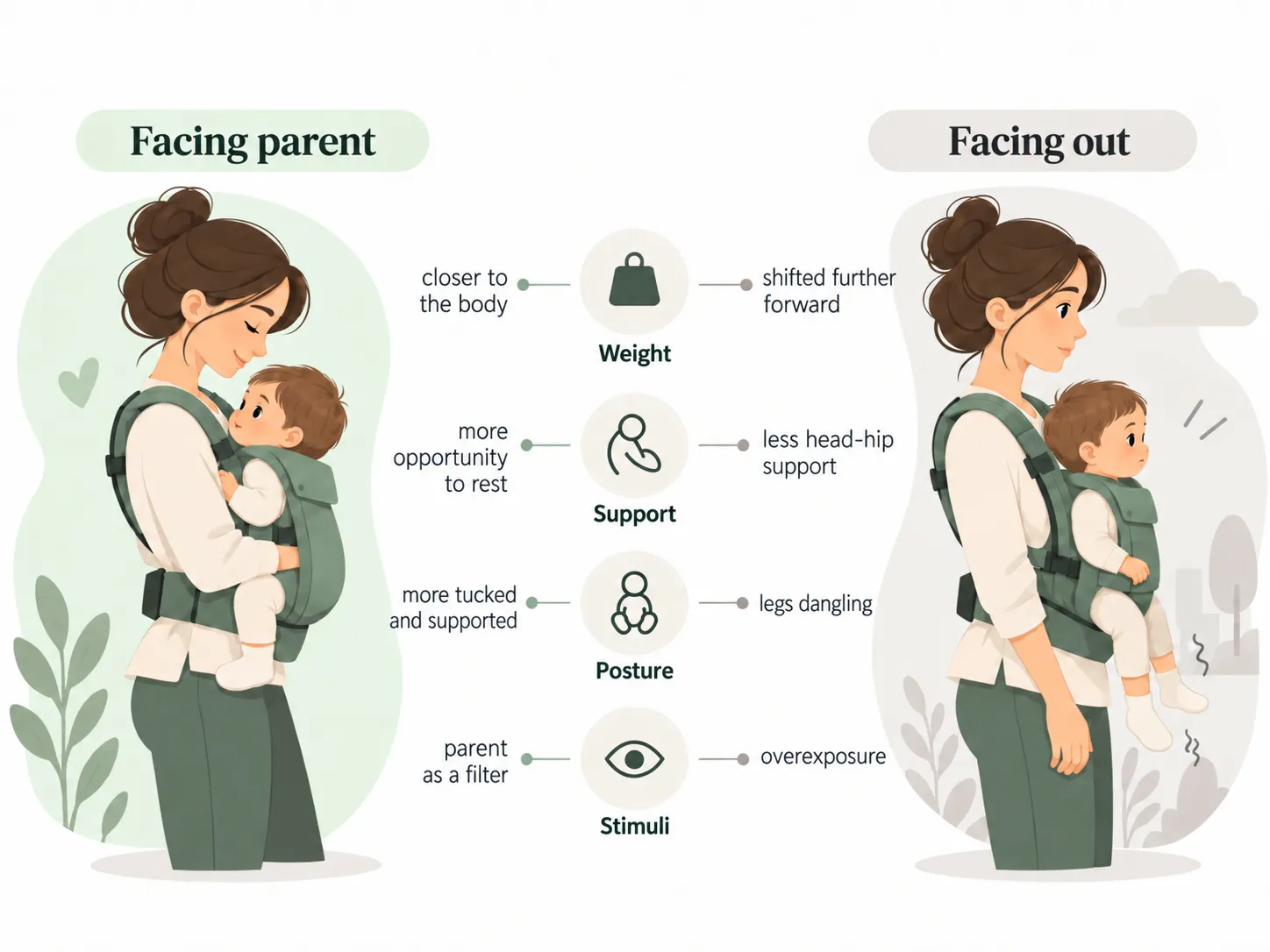
| Aspect | Facing the wearer | Outward-facing |
|---|---|---|
| Thighs and pelvis | Easier to maintain continuous support and a tucked position | It can be harder to maintain the same type of support |
| Closeness to the body | The baby stays close to the wearer | The baby’s body faces outward |
| Centre of gravity | The weight stays closer to the wearer’s body | The weight tends to project further forward |
| External stimulation | The baby can look around and easily turn back toward the wearer | The baby remains more directly exposed to what is happening in front |
| Rest | The baby can lean in and settle toward the wearer | The wearer’s body is not in front as a place to rest against |
| BabyMonkey carriers | ✓ Supported position | — Position not supported |
A consistent choice in the first months too
The International Hip Dysplasia Institute recommends carrying facing the wearer during the first six months, a period when the hips develop rapidly, and describes a position with supported thighs and flexed, abducted hips as favourable.
For BabyMonkey, this reinforces a principle already built into our products: prioritising positions that allow us to provide clear, consistent support rather than adding a carrying mode simply because the market asks for it.
Three alternatives for a curious baby
Curiosity and the desire to look around do not require an outward-facing position.
Front carry
The baby can freely turn their head and look around while staying close to the wearer.
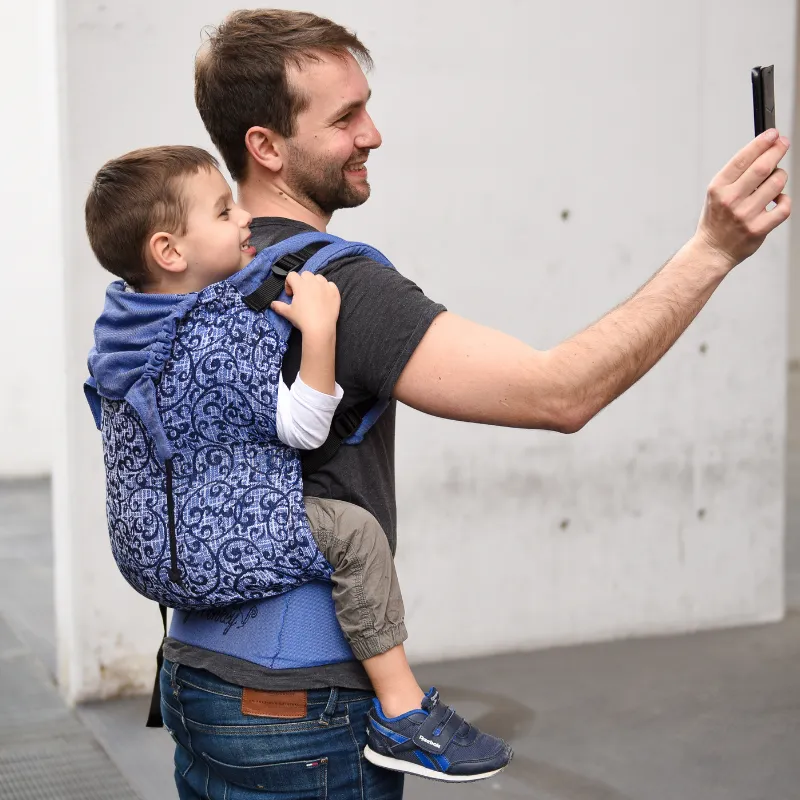
Back carry
When ready, the baby gets a much wider view in a position supported by our carriers.
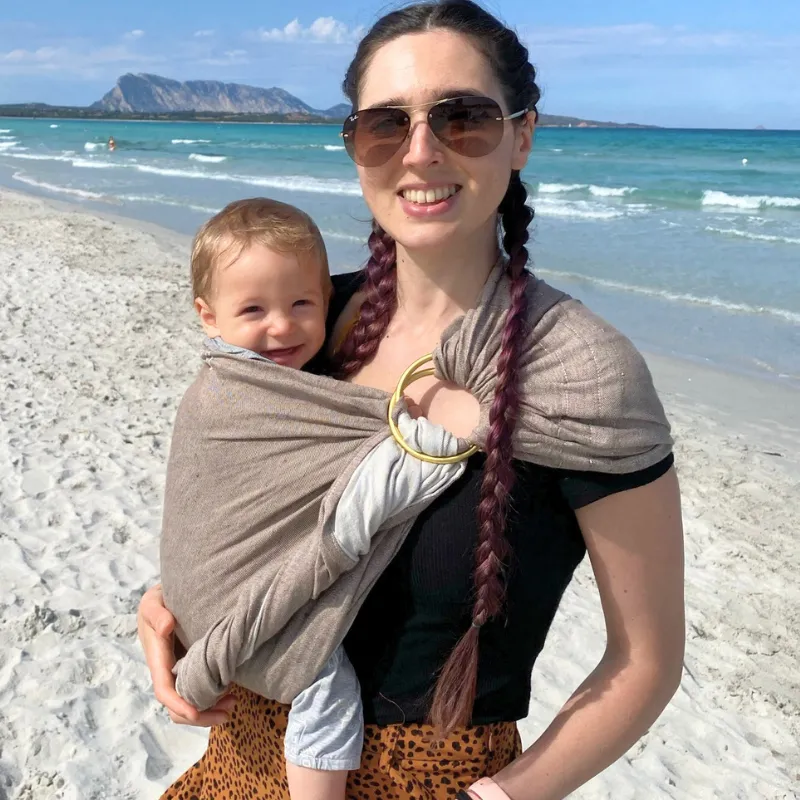
Hip carry
With a ring sling, the baby can look around while staying close to the wearer’s body.
Regolo and Agilo: two carriers, the same design choice
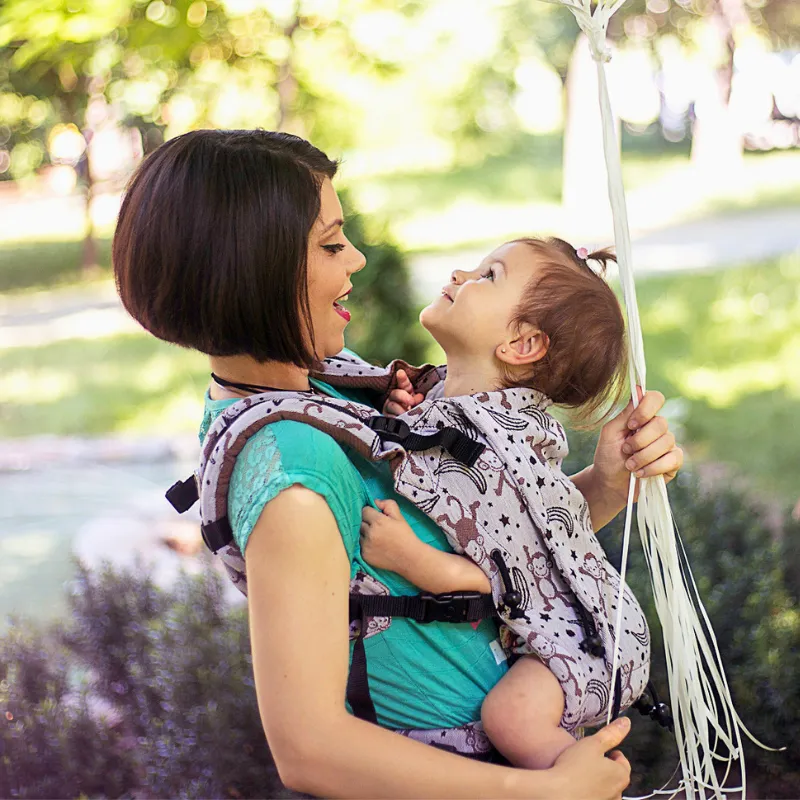
Both are designed for carrying facing the wearer and, when the child is ready, on the back. We have not added outward-facing carrying because we prefer to focus on a few positions that are carefully designed and clearly explained.
FAQ about outward-facing carrying
Looking for an ergonomic baby carrier without the fuss?
Regolo is designed to be adjustable, intuitive and easy to use, with the positions we have chosen for real everyday babywearing: facing the wearer and back carrying.